sao ohtake
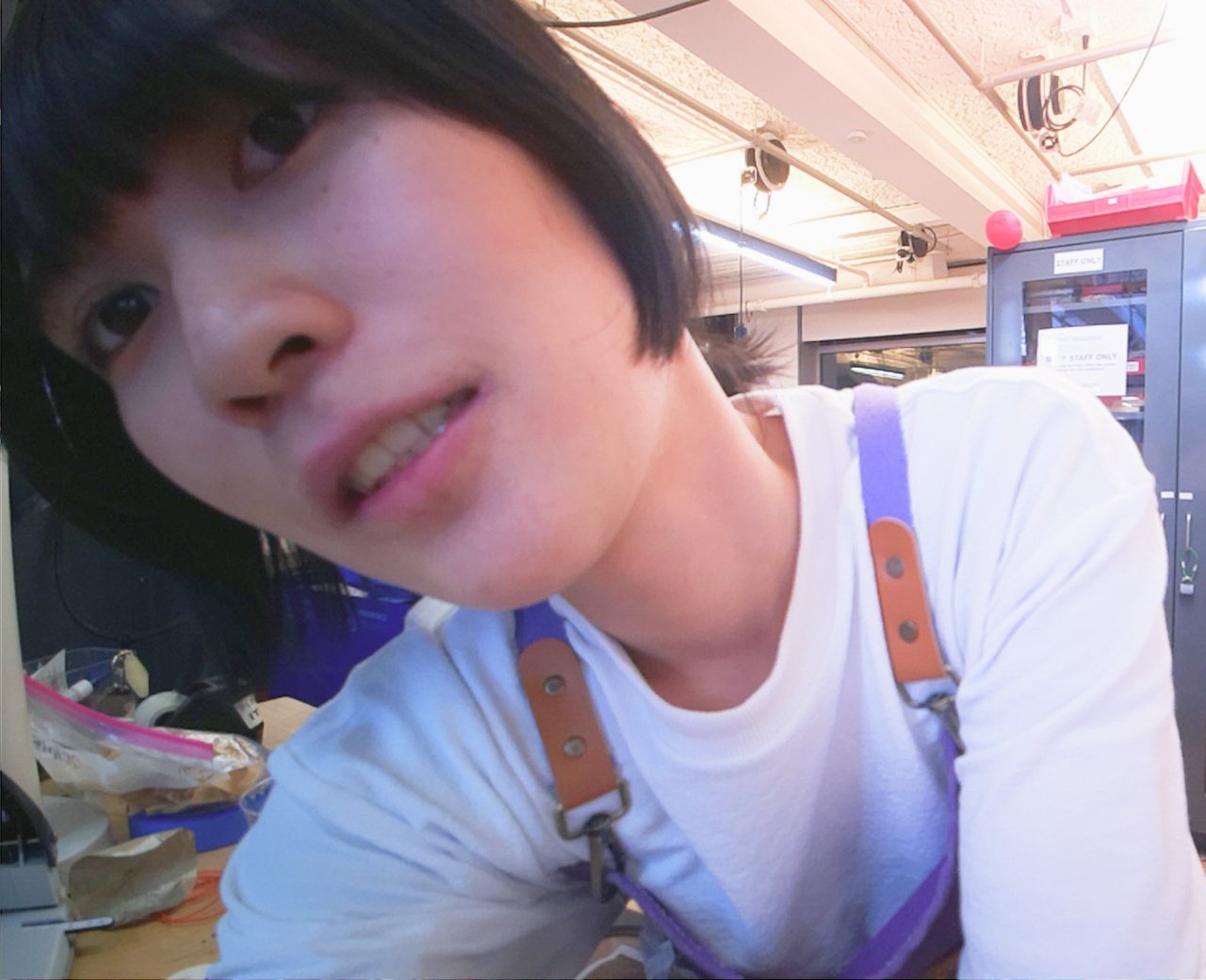
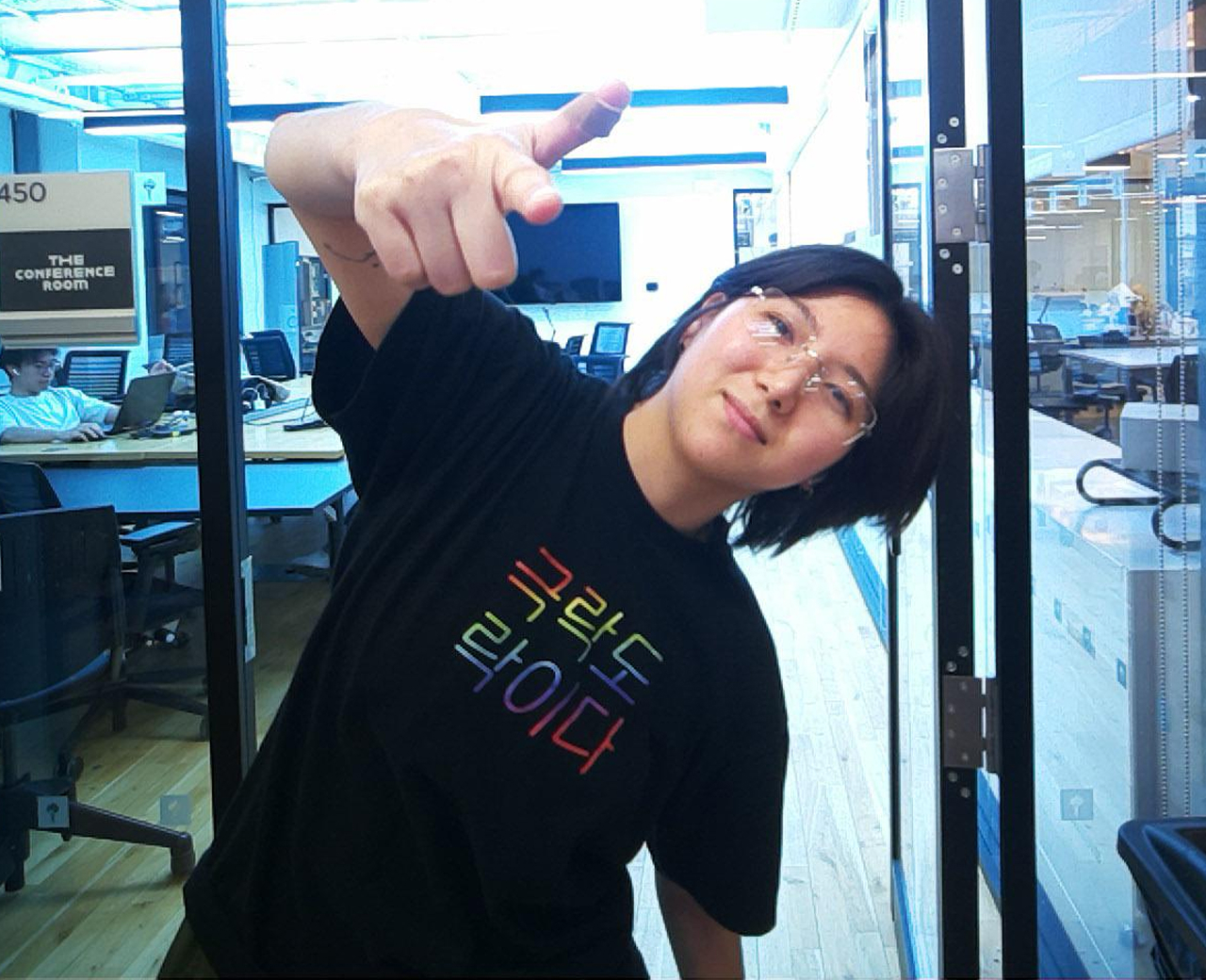
Sao Ohtake (b. 2000, Japan; based in Manhattan) is an installation artist exploring connections between herself, the places she lives, and their people.
Her work examines how political tensions subtly shape daily life and how people seek reconnection through dialogue and empathy. She is drawn to moments when differing values are bridged through nonverbal, tactile interaction. She creates sculptures and installations using soft materials and sound. Sao holds a BFA from the School of the Art Institute of Chicago and a master’s from the Interactive Telecommunications Program at NYU Tisch. Her work has been shown at Tokyo Opera City (2022), the Detroit Institute of Arts (2024), the Leigh Yawkey Woodson Art Museum (2025).
Her work examines how political tensions subtly shape daily life and how people seek reconnection through dialogue and empathy. She is drawn to moments when differing values are bridged through nonverbal, tactile interaction. She creates sculptures and installations using soft materials and sound. Sao holds a BFA from the School of the Art Institute of Chicago and a master’s from the Interactive Telecommunications Program at NYU Tisch. Her work has been shown at Tokyo Opera City (2022), the Detroit Institute of Arts (2024), the Leigh Yawkey Woodson Art Museum (2025).
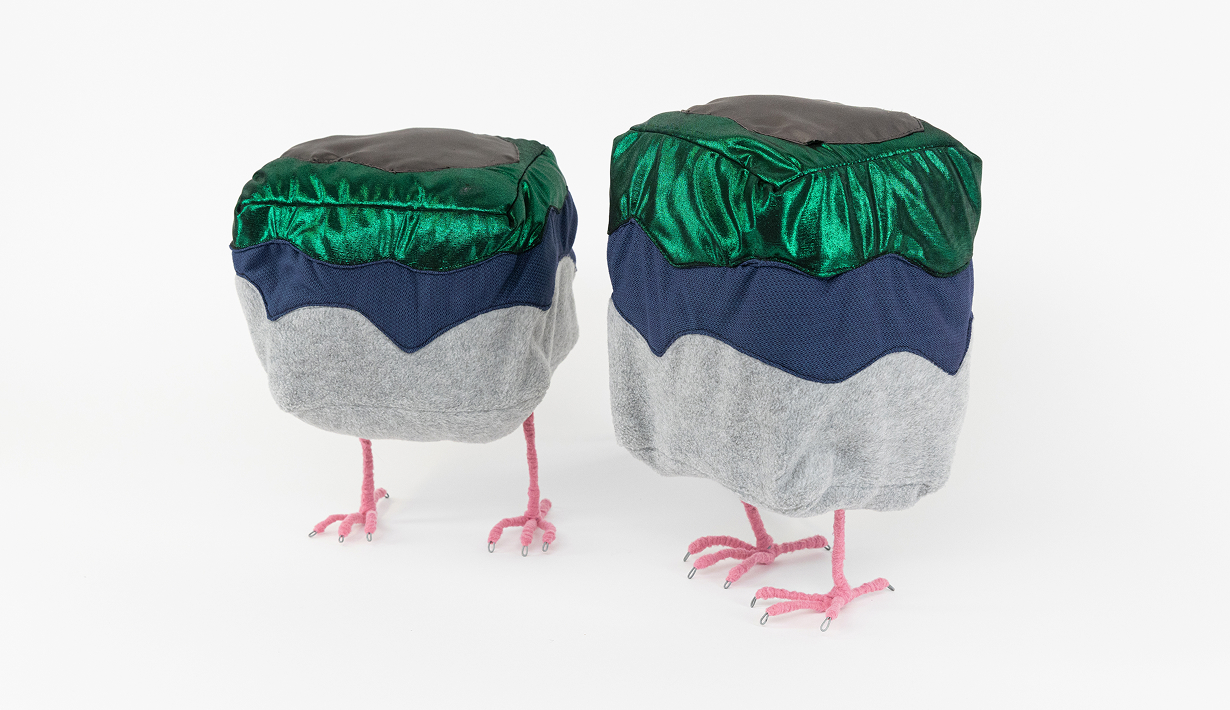
immortal pigeons
2024 / Transducer Speaker, Fleece, Wire, Arduino Zero, VS1053 codec
H134 * W52 *D52 (cm)
H134 * W52 *D52 (cm)
A sound sculpture for mourning the death of pigeons. The gap between soft materials and "mourning the dead" creates a fresh impression on spectators, thereby breaking with conventional expectations of the theme of death, which has a cold impression. As a result, it elicits subtle emotions in them, bringing a new understanding of the pigeons that coexist in the city.
This artwork is collected by the Leigh Yawkey Woodson Art Museum
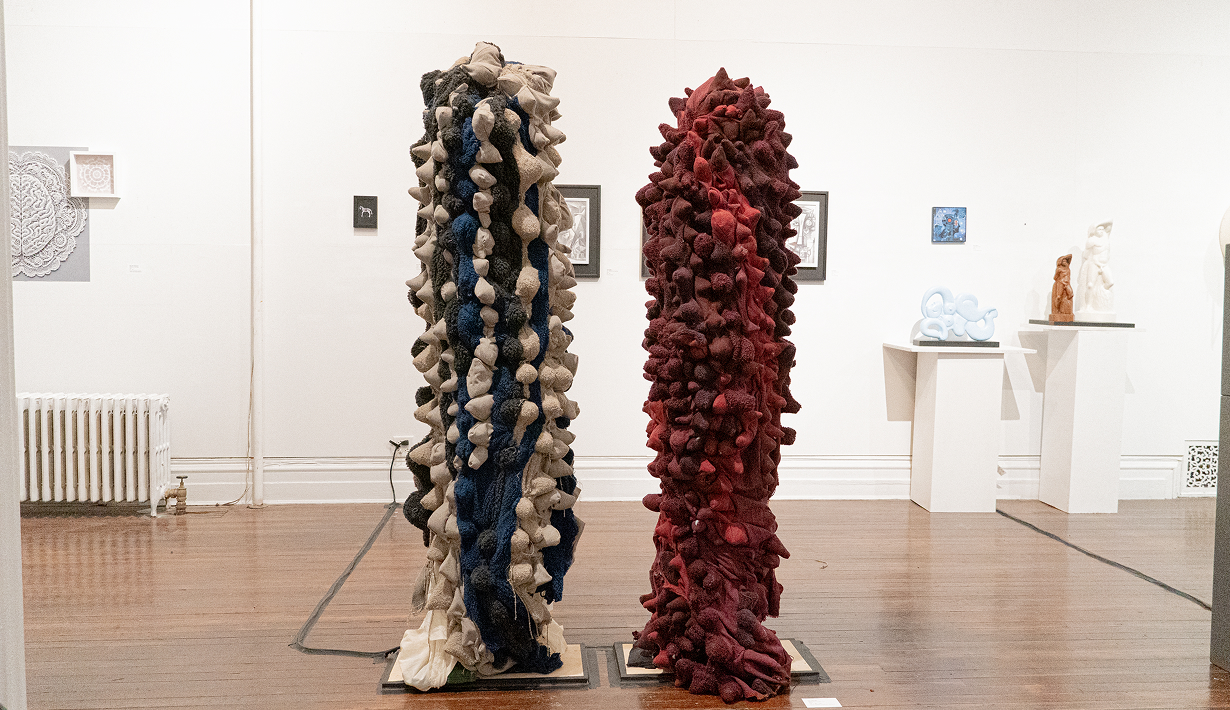
Soft Tensions
2025 / Transducer, Speakers, Fleece, Wire, Feather Proto M0, Music Player
H179 * W91 *D61 (cm)
H179 * W91 *D61 (cm)
Living in New York, I’ve witnessed how global tensions can strain everyday relationships. Yet, amid conflict, I’m drawn to quiet gestures—like a hug or shared stillness—that speak beyond words. My work focuses on these non-verbal moments through tactile materials, sound, and vibration. The sculptures invite viewers to engage through sensation, emphasizing shared vulnerability and presence over interpretation.
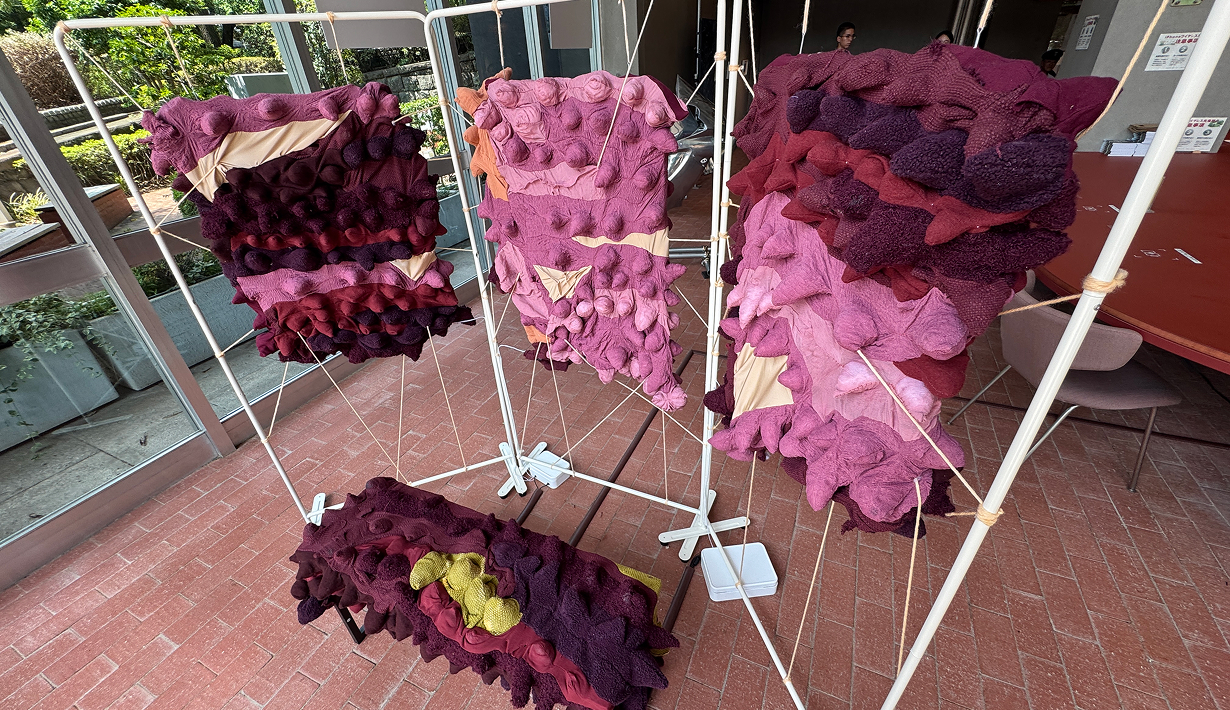
Sitting on the Spikes
2025 / Fabric, Speaker, Foam board, Room Dividers, Microcontroller, Audio Module
H150 * W200 *D160 (cm)
H150 * W200 *D160 (cm)
This work emerged from "spike-like discomfort" I experienced while living in the United States. Through conversations with friends from different countries, I came to realize the pain caused by conflicting memories and perceptions of history, as well as the contradictory desire, which present in both myself and others, to stay connected and to live together despite those differences.
jiyou park
Jiyou Park (b. 1996) is a New York–based artist and designer who creates interactive installations integrating technology with tactile materials. Born in Australia and raised in Korea, Park’s practice is informed by diverse cultural experiences and explores how distinct worlds converge and form meaningful relationships.
At the core of Park’s work is the notion of connection. She employs interactive systems and physical computing to integrate participants’ movements and perceptions into the work itself. Through these strategies, relationships emerge—between people, between time and place, and between the visible and invisible—inviting audiences to engage with the subtle threads that interweave human experience.
At the core of Park’s work is the notion of connection. She employs interactive systems and physical computing to integrate participants’ movements and perceptions into the work itself. Through these strategies, relationships emerge—between people, between time and place, and between the visible and invisible—inviting audiences to engage with the subtle threads that interweave human experience.
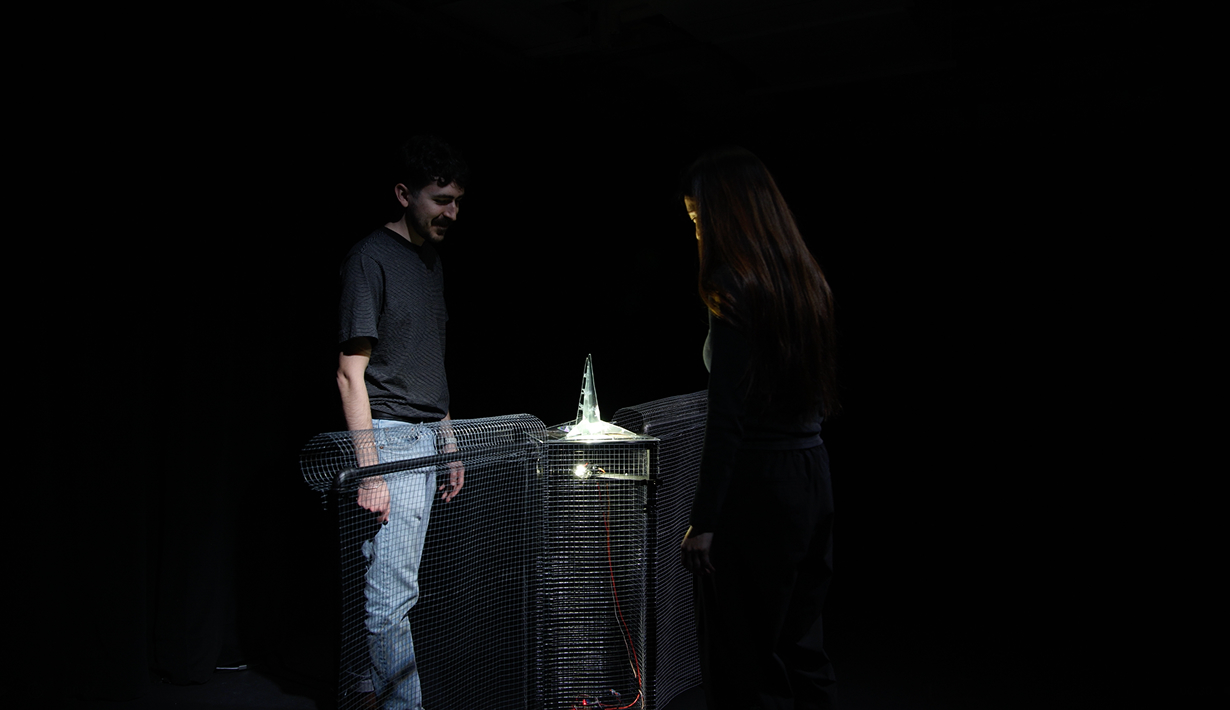
Juxtaposition
2025 / Glass, barbed wire, Led, microcontroller, IR sensor
H130 * W162 *D42 (cm)
H130 * W162 *D42 (cm)
Juxtaposition is an interactive installation that transforms confrontation into connection. Inspired by the paradox of the Korean Demilitarized Zone (DMZ), the work consists of two facing fences and a central sculpture made of fractured glass, shaped by the explosive form of a landmine.
Sea U
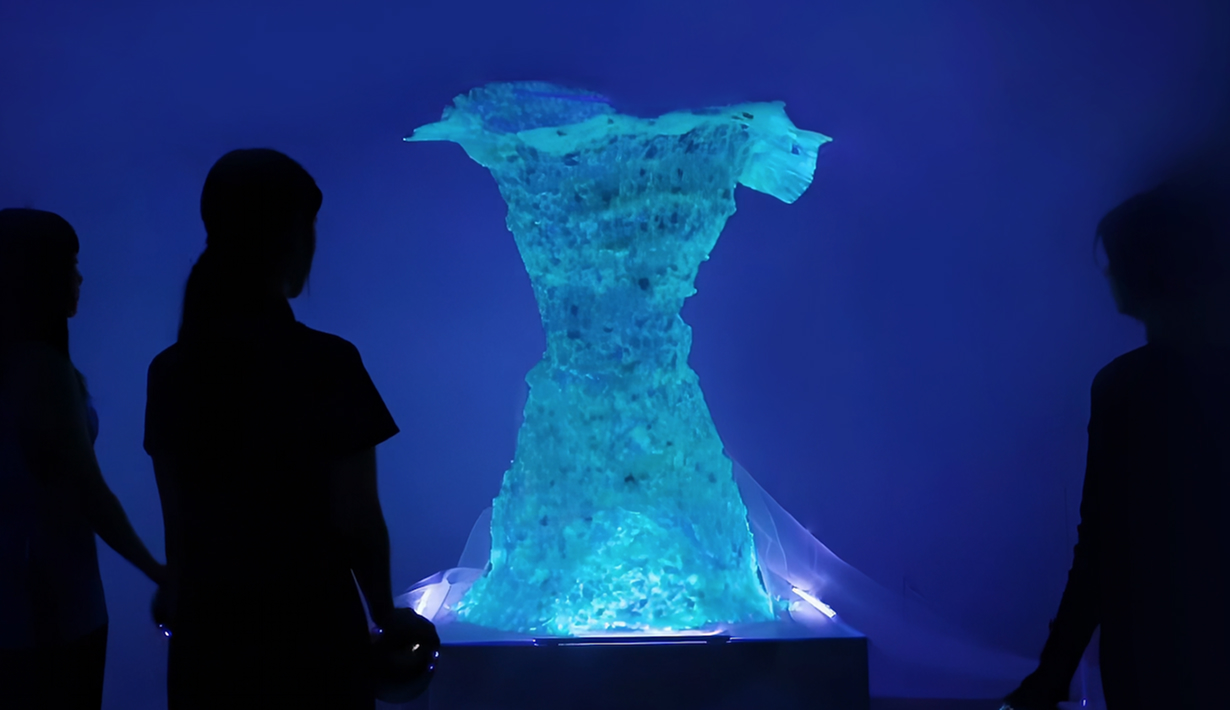
2023 / Glass, barbed wire, Led, microcontroller, IR sensor
H160 * W90 * D80 (cm)
H160 * W90 * D80 (cm)
"Sea U" is an interactive media work that explores three fundamental forms of connection: between art and people, between people and one another, and between people and nature. By gently expanding the idea of connection, the piece evokes a quiet sense of warmth—reminding us of the relationships that have always been part of us.
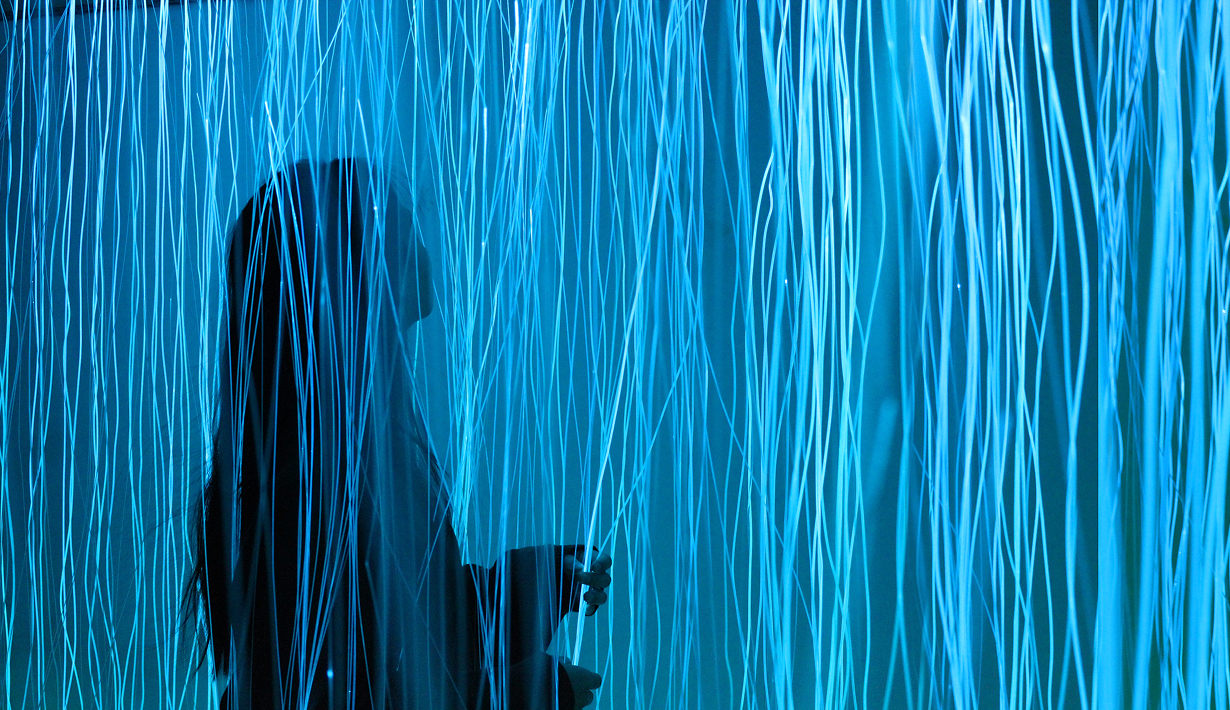
Sea the light
2020 / Side light optical fiber, LED, microcontroller, sensor
H250 * W300 * D300 (cm)
H250 * W300 * D300 (cm)
“Sea the Light” is interactive light installation that transforms a simple gesture—two people holding hands—into a glowing sea of connection. The work reflects on how personal encounters become shared emotional landscapes.